Lehenga Pattern Calculator
Free lehenga pattern calculator online with kali count, fabric requirements, ghera measurements & visual pattern preview. Made for Indian brides & designers.
Enter Your Details
Get pattern, fabric & kali calculations instantly
Lehenga Pattern
Tailor-ready measurements & pattern
Fill details and click Calculate to see your lehenga pattern
How to Measure for Lehenga
4 simple steps for perfect lehenga measurements
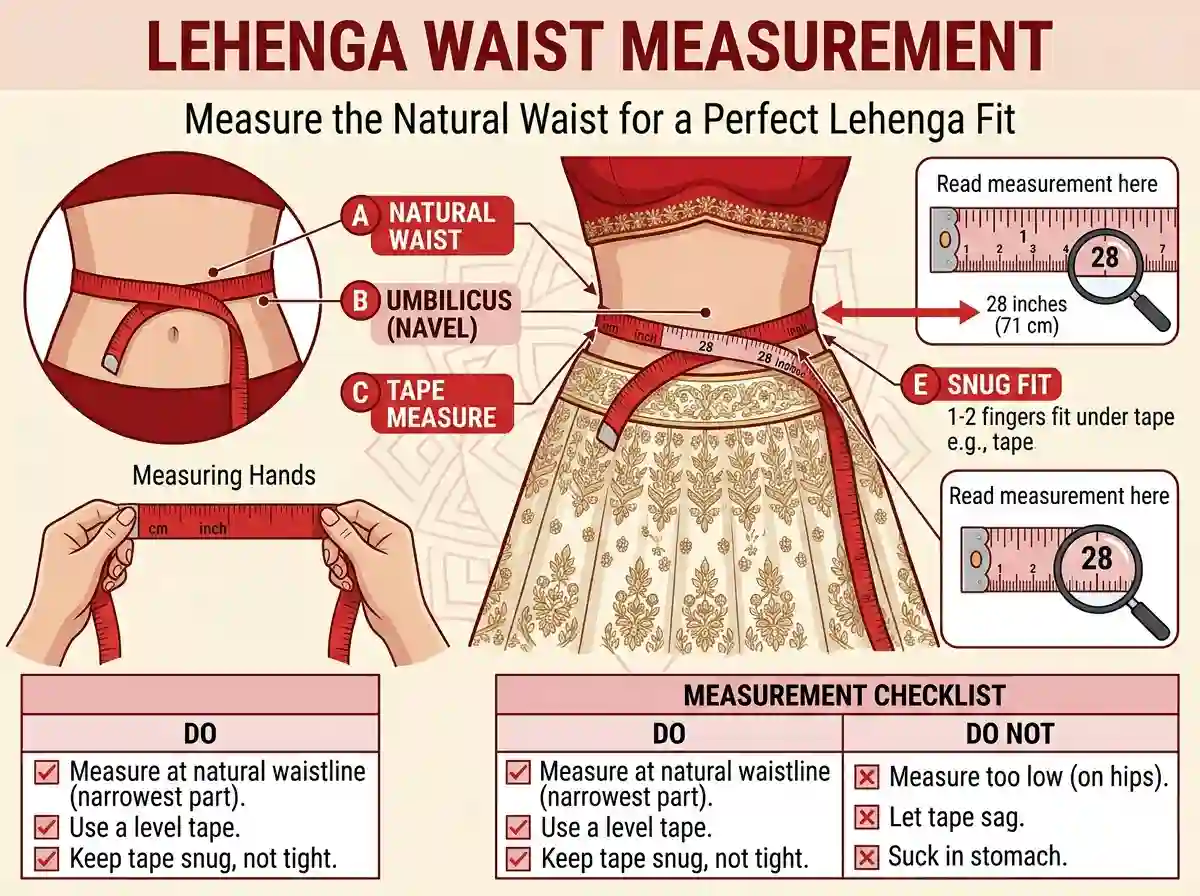
Measure Waist
Measure around your natural waistline at the narrowest part of your torso.
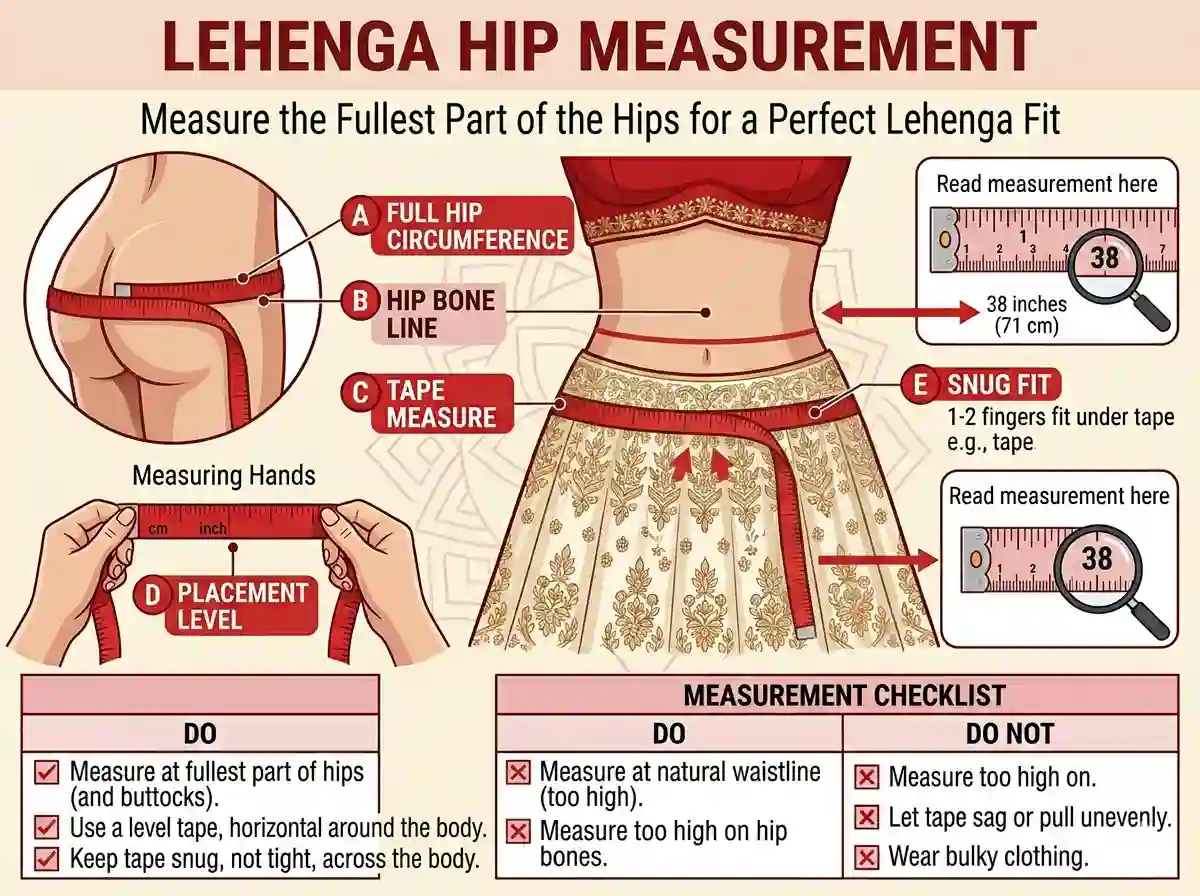
Measure Hip
Measure around the fullest part of your hips, usually 7-8 inches below waist.
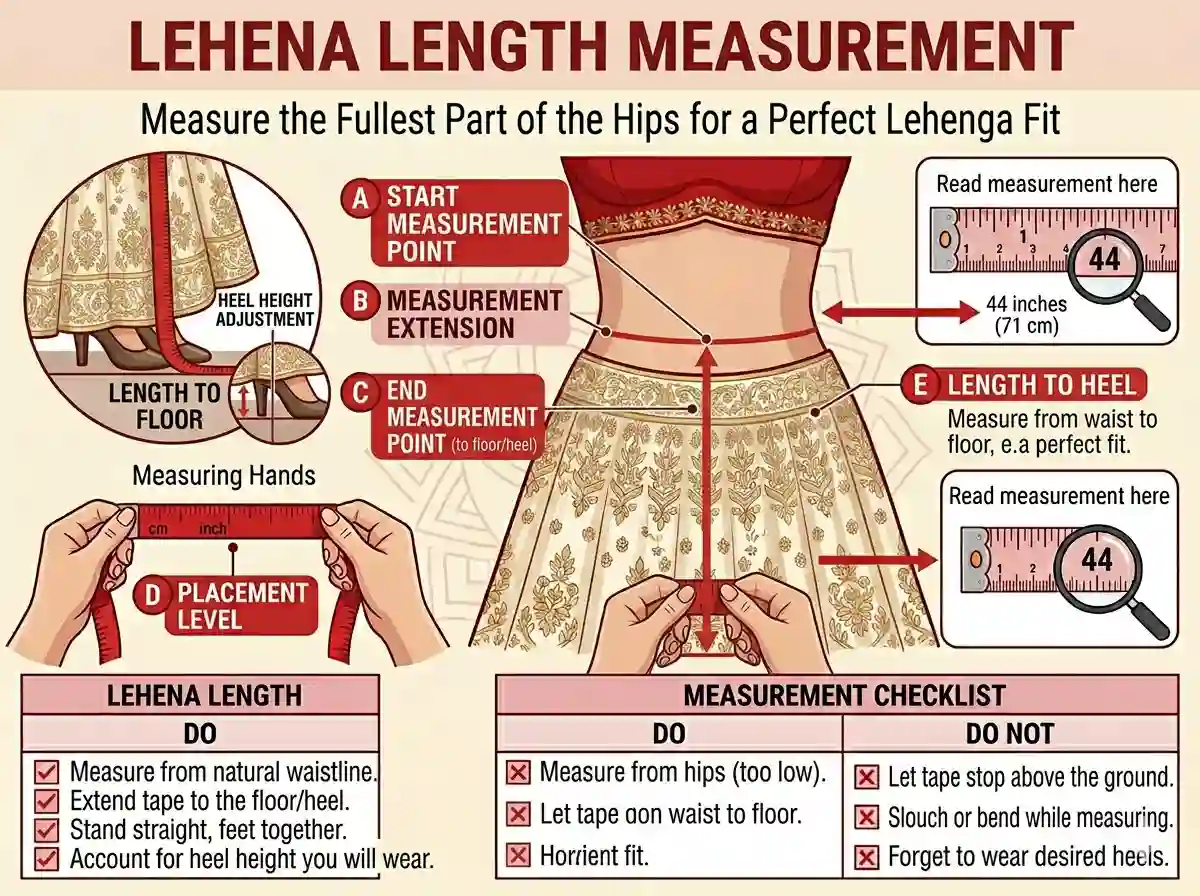
Measure Length
Measure from waist to floor while wearing your wedding shoes/heels.
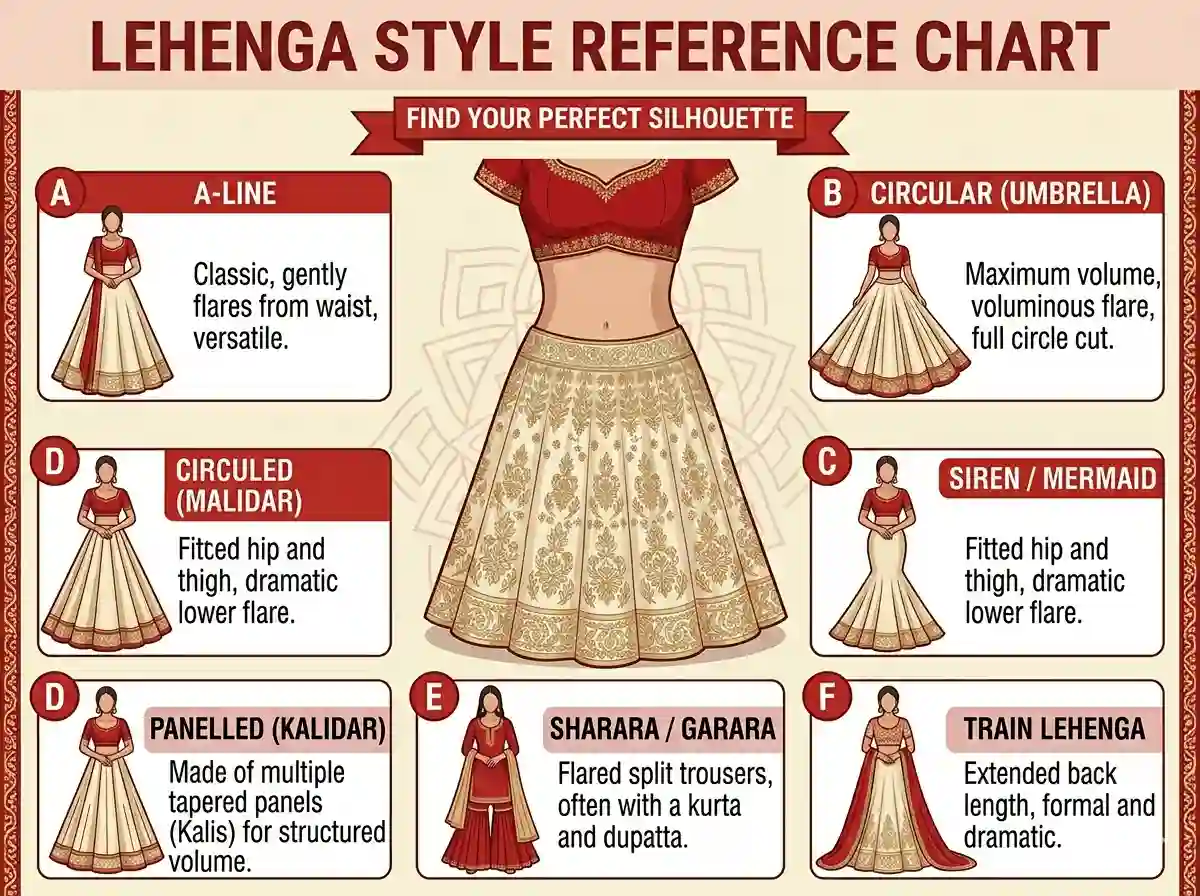
Choose Style
Decide on lehenga style (A-line, circular, mermaid) based on body shape.
Lehenga Size Reference
Standard lehenga measurements for Indian women
| Size | Waist | Hip | Length | Standard Ghera | Recommended Kalis |
|---|---|---|---|---|---|
| XS (28) | 26″ | 34″ | 38″ | 4m | 6-8 |
| S (30) | 28″ | 36″ | 39″ | 4-5m | 8-10 |
| M (32) | 30″ | 38″ | 40″ | 5m | 8-12 |
| L (34) | 32″ | 40″ | 40″ | 5-6m | 10-14 |
| XL (36) | 34″ | 42″ | 40″ | 6m | 12-16 |
| XXL (38) | 36″ | 44″ | 40″ | 6-7m | 14-18 |
| 3XL (40) | 38″ | 46″ | 40″ | 7m | 16-20 |
Free Lehenga Pattern Calculator Online
Designerwali’s lehenga pattern calculator is India’s most comprehensive free online tool for calculating lehenga measurements, kali counts, fabric requirements, and ghera flare. Whether you’re a bride preparing for your wedding, a fashion design student learning Indian garment construction, or a professional tailor managing multiple client orders, this lehenga design calculator simplifies what used to be a complex mathematical process. Just enter your waist, hip, length, and style preference — get a complete pattern sheet with visual previews instantly.
The traditional method of designing a lehenga requires deep expertise in Indian tailoring mathematics. A skilled darzi calculates the relationship between waist circumference, ghera, kali count, and fabric width to create a perfectly draping garment. Our lehenga kali calculator automates this entire process using formulas trusted by master tailors in fashion hubs like Chandni Chowk Delhi, Surat Gujarat, and Mumbai’s bridal markets. The result is a foolproof pattern sheet anyone can use.
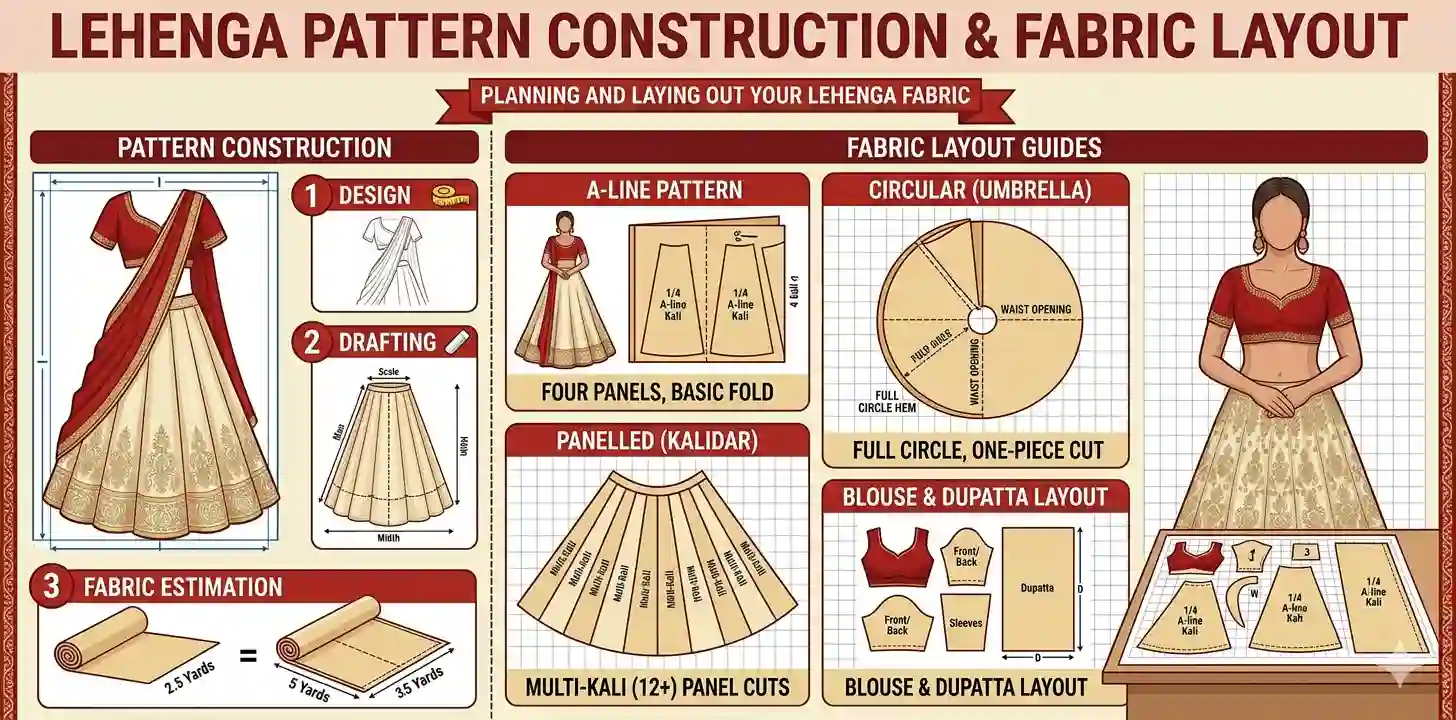
Understanding Lehenga Construction
A traditional Indian lehenga consists of multiple vertical panels called kalis stitched together to create the flared skirt. The number of kalis directly affects the volume and drape — more kalis equal more flare, more dramatic twirl, and more fabric required. A simple ghagra pattern calculator approach uses 4-6 kalis for an A-line silhouette, while heavy bridal lehengas use 12-24 kalis to achieve the signature 360° flare visible in wedding photos.
The ghera refers to the bottom hem circumference of the finished lehenga. Standard everyday lehengas have a 3-4 metre ghera, while bridal lehengas range from 6-10 metres. Our lehenga ghera calculator helps you find the right balance between desired flare, comfort, and budget. Larger ghera looks dramatic but is heavier to wear and more expensive due to fabric requirements. The right choice depends on the occasion, your body type, and personal style preference.
Kali Calculation Formula
The fundamental formula our lehenga kali calculator uses is straightforward but requires precision:
- Kali Bottom Width = Total Ghera ÷ Number of Kalis
- Kali Top Width = Waist Measurement ÷ Number of Kalis
- Kali Length = Lehenga Length + Hem Allowance (1-2 inches)
For example, a lehenga with 5-meter ghera and 10 kalis means each kali is 50cm wide at the bottom. With a 30-inch waist, each kali is 3″ wide at the top. This creates a smooth transition from narrow waist to dramatic flare. Our calculator handles this math automatically and even accounts for seam allowance, hip ease, and special construction techniques like godets.
How Much Fabric Does a Lehenga Need?
Fabric requirement is one of the biggest concerns for Indian brides shopping for their wedding lehenga. Our lehenga fabric calculator provides accurate estimates based on your specifications. As a general guideline, a basic A-line lehenga with 4-meter ghera needs about 4-5 metres of fabric. A circular bridal lehenga with 6-8 meter ghera requires 7-9 metres. Heavy paneled lehengas with 16+ kalis can need up to 12 metres of premium fabric.
The fabric type significantly affects requirements. Lightweight fabrics like georgette and chiffon need extra layers and lining for opacity, increasing total fabric. Heavy fabrics like raw silk and velvet are more forgiving but require careful handling. Net and tulle lehengas need 2-3 layers for proper structure, doubling fabric requirements. Always factor in additional yardage for borders, embellishment patches, and matching dupatta.
★ Quick Fabric Guide
For a standard wedding lehenga with 6m ghera and 12 kalis: Main fabric 6.5m + Lining 5m + Canvas 2m + Border 6m = approximately 19.5m total. Always buy 10-15% extra for emergencies and pattern matching.
Choosing the Right Lehenga Style
Different lehenga styles suit different body types and occasions. The A-Line lehenga is the most universally flattering — slightly flared from the waist, ideal for pear-shaped bodies and casual events. With a 4-5 metre ghera and 6-8 kalis, A-line lehengas are budget-friendly and easy to construct, perfect for first-time tailoring projects.
The Circular lehenga is the showstopper — featuring full 360° flare with 6-10 metre ghera and 12-24 kalis. This is the iconic bridal style seen in Bollywood movies and high-end weddings. The dramatic twirl effect requires lots of fabric and skilled construction, but the visual impact is unmatched. Mermaid or fish-cut lehengas hug the waist and hips, then flare dramatically from the knees down. This silhouette suits hourglass figures beautifully and is trending for engagement parties and reception events.
Paneled/Kalidar lehengas use 12-24 narrow vertical kalis, often with contrasting colors or different fabrics for a layered effect. This style is perfect for festival wear like Navratri Garba where dramatic twirl is essential. Lehenga Saree combines the best of both worlds — pre-pleated lehenga skirt with attached saree drape, making it easy for non-traditional wearers. Straight-cut lehengas with minimal flare (3m ghera) suit minimalist modern brides and work well as cocktail dresses.
Bridal vs Casual Lehenga
The distinction between bridal and casual lehengas extends beyond just embellishment. Bridal lehengas typically feature 6-10 metre ghera with 12-24 kalis, heavy gold/silver embroidery (zardozi, gota patti, sequin work), premium fabrics like raw silk or velvet, complex multi-layer construction with canvas for volume, and matching heavy dupatta. The total fabric requirement can reach 15-20 metres including all layers and embellishments.
Casual lehengas for festivals like Navratri or family functions use simpler 4-5 metre ghera with 6-10 kalis, minimal embellishment, lightweight breathable fabrics like cotton or chiffon, single-layer construction, and matching light dupattas. These need only 5-7 metres of fabric total. Our lehenga measurement chart handles both ends of the spectrum, helping you plan budget and fabric purchases accurately whether you’re sewing your own everyday lehenga or designing a wedding outfit.
Regional Lehenga Variations
India’s diverse regional cultures have produced distinctive lehenga variations. Rajasthani lehengas feature heavy chunni (dupatta) work with mirror embroidery, distinctive pleating, and bold colors like crimson and gold. Gujarati chaniya choli uses vibrant patchwork, cotton fabrics, and elaborate mirror work — perfect for Garba dance with extra-wide ghera. South Indian pavadai incorporates silk fabrics with traditional gold borders and temple-inspired motifs.
Modern designer lehengas blend regional elements creatively. Indo-Western fusion styles combine traditional construction with contemporary cuts. Our lehenga pattern maker works for all these regional and modern styles since the underlying construction principles remain the same — only the fabric, embellishment, and dupatta styling change.
Saving and Sharing Your Pattern
After calculating your lehenga pattern, you have three convenient options. The Print button generates a clean printable version with all measurements and the visual pattern preview that you can take to your tailor. The Copy button copies a formatted text version for sharing via WhatsApp, SMS, or email — useful when working with tailors in different cities. The Details button opens the comprehensive popup showing the full visual pattern, fabric requirements, lehenga style references, and bilingual stitching tips.
📱 Mobile-Friendly
The entire lehenga pattern maker works perfectly on mobile devices. You can use it while shopping for fabric at the store, share results instantly via WhatsApp, and refer back to your pattern sheet anytime. No app installation needed.
Final Thoughts
Designing a lehenga used to require expensive consultations with master tailors or years of personal sewing experience. With Designerwali’s free lehenga pattern calculator online, anyone can get tailor-ready measurements with confidence. Whether you’re a beginner taking your first steps in home tailoring or an experienced stitcher looking to streamline your process, this tool saves time, reduces fabric waste, and produces consistently great results.
Combined with our other free tools — the Blouse Size Calculator and Bra Measurements Calculator — Designerwali offers India’s most complete free toolkit for women’s clothing measurements. Bookmark this page, share it with brides-to-be in your family, and never struggle with lehenga calculations again.
Frequently Asked Questions
Everything about our lehenga pattern calculator
How does the lehenga pattern calculator work?
Our lehenga pattern calculator uses your waist, hip, and length measurements along with your chosen ghera (flare) to calculate kali count, kali width, and fabric requirements automatically. The visual preview shows exactly how each kali should be cut.
How many kalis should a lehenga have?
The number of kalis depends on the desired flare. For a 4-meter ghera A-line lehenga, 6-8 kalis work well. For circular bridal lehengas with 6-8 meter ghera, use 12-16 kalis. Heavy paneled lehengas can have 20-24 kalis. Our calculator auto-suggests based on your ghera.
How much fabric do I need for a wedding lehenga?
A standard wedding lehenga with 6-meter ghera needs approximately 6-7 metres of main fabric, 5 metres of lining, 2 metres of canvas for volume support, and 6 metres of border trim. Total approximately 19-20 metres including all materials.
What is ghera in a lehenga?
Ghera refers to the bottom hem circumference (flare) of the lehenga. A 4-meter ghera means the lehenga’s bottom hem measures 4 metres around. Larger ghera = more flare = more dramatic twirl. Bridal lehengas typically have 6-10 meter ghera.
How do I calculate kali width?
Kali bottom width = Total Ghera ÷ Number of Kalis. Kali top width = Waist Measurement ÷ Number of Kalis. For 5m ghera with 10 kalis, each kali is 50cm wide at bottom. Our lehenga kali calculator handles this automatically.
What is the difference between A-line and circular lehenga?
A-line lehenga has straight kalis flaring slightly outward (4-5 meter ghera, 6-8 kalis). Circular lehenga has fuller 360° flare (6-10 meter ghera, 12-24 kalis) creating dramatic twirl effect. A-line is everyday wear, circular is for weddings.
Can I use this for ghagra and chaniya choli?
Yes! Our ghagra pattern calculator works for all skirt-based Indian wear including lehenga, ghagra, chaniya choli, and Rajasthani/Gujarati traditional skirts. The same kali calculation principles apply.
Should I use canvas in my lehenga?
Yes, canvas/horsehair fabric in the bottom hem creates volume and ensures the flare stays out instead of collapsing. Use 2-3 metres of stiff canvas for bridal lehengas. Light cotton lehengas may not need canvas.
How do I share the pattern with my tailor?
After calculating, click the Copy button to get formatted text for WhatsApp/SMS, or click Print for a paper version. The pattern includes all measurements, kali widths, fabric requirements, and a visual diagram your tailor can reference.
Is this lehenga pattern maker really free?
Yes, our lehenga pattern maker is 100% free with no signup, no charges, and no premium features. Everything including unlimited calculations, fabric estimates, visual patterns, and bilingual tips is completely free forever.